Apalachin
I Heard You Paint HousesApalachin, a small town in upstate New York, became nationally notorious after a November 1957 meeting of Mafia leaders was raided by police. In Frank Sheeran’s account, the place is first approached as an ordinary stop on a drive for Russell Bufalino; the next day, it becomes the site of a public revelation about the reach of organized crime. That contrast gives Apalachin its importance: Sheeran had brought a trusted friend to a gathering whose scale he did not understand, and the meeting turned a quiet town into shorthand for a nationwide criminal network.
A Stop on Russell Bufalino’s Route
Before the meeting, Sheeran had often driven Bufalino around the Northeast. Bufalino’s business took him from Endicott to Buffalo in New York, from Scranton to Pittsburgh in Pennsylvania, and through northern New Jersey and New York City. Sheeran enjoyed his company and did not ask him for money. He later recognized that simply being seen with Bufalino was valuable to him, though at the time he did not know how valuable.
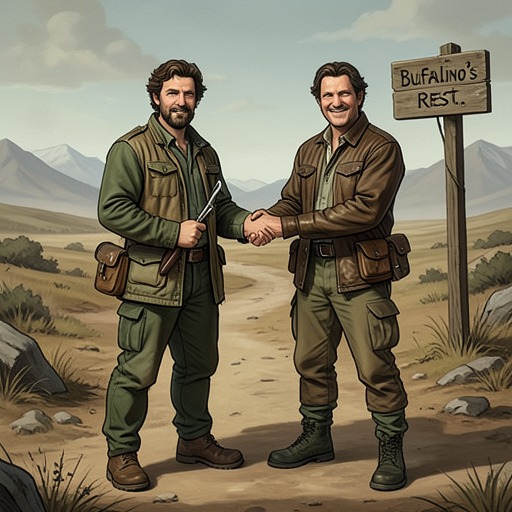
In November 1957, Bufalino asked Sheeran to take him to Apalachin. He said that after his business there he would travel to Erie, Pennsylvania, and then Buffalo, and that he had arranged another ride for those legs of the journey and back to his home in Kingston. Sheeran drove him to a house in the town and dropped him off. He saw nothing unusual. The arrangement placed Sheeran at the threshold of the gathering, but not, as he understood it then, inside its business.
That ordinary errand later acquired a different weight. Sheeran had already driven Bufalino to places where he waited in the car while his passenger conducted business in a house, bar, or restaurant. After Apalachin, he interpreted those trips as part of a pattern: the men did business in person and in cash, rather than by telephone or through banks. The town did not create his relationship with Bufalino, but the journey helped reveal the scale of the world in which that friendship operated.
The 1957 Meeting and Raid
Bufalino had helped organize the Apalachin meeting, called to settle potential problems following the October 1957 shooting of Albert Anastasia in a New York hotel barber chair. The gathering brought godfathers from around the country together in the town. Police in the area, suspicious of the unusual activity, raided the house where the meeting was being held.
The raid made a private gathering suddenly public. One account records that fifty-eight of the country’s most powerful mobsters were seized and taken into custody, while roughly fifty others escaped through the woods. Sheeran recalled the news as the arrest of about fifty gangsters from across the country, with Bufalino among them. The distinction between those accounts does not change the central fact: the gathering was large, geographically broad, and abruptly exposed by the police intervention.
Apalachin’s importance therefore rests not only on who met there, but on the failed effort to keep their association private. Before 1957, the existence of an organized national criminal network could still be disputed in public. The meeting and raid made that denial harder to sustain. The Federal Bureau of Investigation director J. Edgar Hoover, who had long denied that such an organization existed, eventually accepted the reality of a national Mafia, identified in government wiretaps as La Cosa Nostra. The raid transformed an obscure town into evidence that powerful criminal figures were connected across local territories.
From Local Errand to National Story
For Sheeran, the news made earlier journeys legible in retrospect. Bufalino’s requests to drive him, and the stops where Sheeran waited outside while business took place, now seemed less like isolated errands. The public account of Apalachin supplied a framework for understanding the reach of Bufalino’s contacts. Sheeran described Bufalino as one of the biggest bosses in the business and understood that the people associated with him and Angelo Bruno were involved in crimes ranging from murder and prostitution to drugs and hijacking, as well as loan sharking, gambling, and labor racketeering.
The change was also personal. Sheeran had shared wine and meals with Bufalino, knew his wife, and brought him prosciutto bread and sausages; Bufalino asked after Sheeran’s children and gave him homemade red wine. After the publicity, Sheeran stopped seeing him downtown for a time, and Bufalino no longer called him to drive. Sheeran took this as avoidance of public attention. The friendship remained, but its public meaning had changed: Sheeran was no longer merely a working man who knew a congenial older friend. He was a man known to have driven one of the country’s most powerful mob figures to Apalachin.
The association later extended beyond the town. Sheeran says he recommended a lawyer when Bufalino’s long-running deportation proceedings reached their final appeal; Bufalino was grateful after the lawyer’s intervention helped prevent Italy from accepting him. This later favor does not make Apalachin its cause, but it shows how the relationship that the town had made newly legible continued to carry practical weight. The episode’s consequences did not end with the raid or the headlines.
A Place Recalled Through Suspicion
Apalachin recurs in the book as both a location and a retrospective clue. The prologue describes Jimmy Hoffa’s yellow pad, found beside his telephone in a lakeside cottage, with the handwritten words Russ & Frank. The names refer to Bufalino and Sheeran, close friends and allies whom Hoffa’s family feared could have gained access to him because he trusted them. The book presents the pair as leading suspects in Hoffa’s disappearance. The pad does not establish a connection between Hoffa’s note and the 1957 meeting, but Apalachin provides an earlier, concrete scene in which Sheeran’s closeness to Bufalino is visible: he drove Bufalino to the gathering and stood near its history without knowing what it meant.
The town’s narrative force comes from this gap between proximity and understanding. Sheeran delivers Bufalino to the house, sees nothing unusual, and only after the arrests reads the news that changes the meaning of the trip. Apalachin marks the moment when a personal bond becomes legible as a connection to a national criminal organization. Later suspicion surrounding the two men gives that apparently minor drive a darker afterlife, while the location itself remains the point where private loyalty, public exposure, and the book’s larger account of organized power converge.